





One of the biggest shifts we’re seeing in global sport and entertainment is that the event itself is no longer the whole product.
A sports match, concert or major cultural event may be the reason people come through the gates, but the value of a venue is increasingly shaped by everything that sits around it: the hospitality experience, digital reach, partner engagement, content created before and after the event, precinct activity, and the reasons people have to connect with the venue when there is no major event on at all.
This was reinforced during the Business of Entertainment, Media and Sports programme which I attended at Harvard Business School last week. The programme brought together leaders from across global sport, entertainment, media and business to examine how some of the world’s most successful organisations are thinking about growth, audience behaviour, brand value, premium experiences and the future of live entertainment.
What became clear throughout the programme was not that the world is changing – most people understand that – but how deliberate leading organisations are becoming about where they place their focus.
One of the central themes was the concept of blockbuster strategy i.e. the greatest commercial returns are often not generated by doing more of everything, instead, they are generated by identifying a small number of transformational opportunities and executing them exceptionally well.
That is an important concept for stadiums, particularly when we talk about utilisation.
Utilisation is sometimes misunderstood as simply adding more events to a calendar. In reality, the challenge is more strategic than that. A modern stadium needs major event-day content that can attract audiences, tourism, hospitality demand, media attention and commercial value, but it also needs non-event-day content and offerings that keep the venue active, relevant and connected to different audiences throughout the year.
This is also where the experience economy becomes important. People are not simply choosing between one event and another. They are choosing how to spend their time, money and attention. In that environment, stadiums need to create experiences that feel distinctive, memorable and worth leaving home for. That might be a sold-out concert, an All Blacks test, a premium hospitality experience, a rooftop tour, stadium golf, glamping or a community event on the turf. The scale may differ, but the underlying principle is the same: people are seeking experiences that create connection.
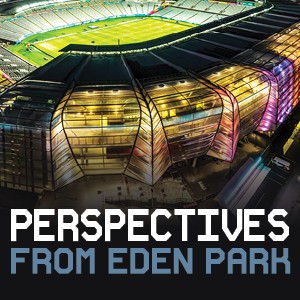
This is the balance we have been building at Eden Park.
Events such as All Blacks games, the FIFA Women’s World Cup, P!NK, Coldplay, Metallica, the Royal Edinburgh Military Tattoo and major international sporting fixtures do far more than fill seats. They activate the wider city, support hotels, restaurants, transport and retail, strengthen the Eden Park brand and help position New Zealand as a credible destination for global content.
But the strategy cannot stop there. Stadium golf, rooftop and stadium tours, glamping, functions, community activity, premium hospitality, precinct activation and partner-led experiences are also part of the content mix. They may not all operate at the same scale as a major event, but they broaden the relationship people have with Eden Park and create more reasons to engage with the stadium as guests, visitors, participants, partners and members of the community.
This is where the connection between content, utilisation and experience becomes important. A national stadium cannot be treated as a venue that only comes alive when the lights are on for a major fixture or concert. It needs to operate as a platform for sport, entertainment, culture, hospitality, tourism, business and community.
The case studies explored at Harvard reinforced this broader point. Real Madrid’s Galácticos strategy showed how elite talent can create value beyond performance. David Beckham’s career demonstrated how a personal brand can transcend sport and become a global commercial platform. Inter Miami’s acquisition of Lionel Messi showed how one transformational decision can change the economics, relevance and international profile of an organisation.
The lesson is not that every organisation needs a Messi, a Beckham or a Galáctico. It is that disproportionate value is created when attention, brand, experience and execution come together.
One of my strongest takeaways was that attention is now one of the scarcest assets in sport and entertainment. Audiences have more choice than ever – they can watch, stream, scroll, share, follow and engage from almost anywhere, which means venues cannot assume that live attendance alone is enough. The challenge is to create experiences compelling enough to earn attention before, during and after the event.
The MrBeast case study was also interesting. It was less about YouTube as a platform and more about how quickly audience behaviour is changing. Younger consumers are discovering and engaging with content differently, often following creators and personalities as much as traditional institutions. It was a reminder that the boundaries between sport, entertainment, gaming, social media and live experiences are increasingly blurred.
This is why Eden Park’s diversification strategy is important. We are not moving away from sport or history – rugby and cricket remain fundamental to who we are – but a successful national stadium cannot be defined by one format, one season or one type of customer. It must be able to host major sport, concerts, cultural events, family experiences, hospitality, community activity and new forms of entertainment that may not yet sit neatly in traditional categories.
For me, the greatest value from Harvard was not the certificate or the classroom. It was the opportunity to test Eden Park’s strategy against global thinking in sport, entertainment and media. What it reinforced is that our direction is not about doing more for the sake of it. It is about being deliberate about the content, experiences and partnerships that will keep Eden Park relevant, sustainable and globally connected.
Our opportunity is to keep building Eden Park as a venue that is active, adaptable, innovative and globally relevant. That means continuing to pursue major international content, while also strengthening the non-event-day experiences and offerings that make the stadium more than a place people visit a handful of times a year.
Next week, I will explore the other side of this discussion: what it takes for New Zealand to earn its place in an increasingly competitive global content market, and why venues, infrastructure, partnerships and premium experiences all matter if we want major events to keep choosing this country.