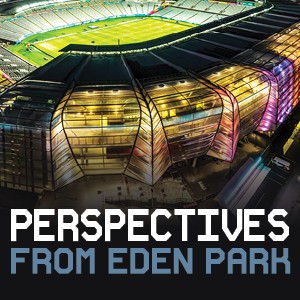






While our focus is already on the year ahead, the release of Eden Park’s FY2025 financial results today, which delivered a strong $4.9m operating profit, provides an opportunity to reflect on a broader issue. Achieving long-term sustainability is one of the greatest challenges facing stadiums globally, and it’s worth exploring why.
In my experience, stadium profitability is often misunderstood. There is a common assumption that large stadiums are, by their very nature, profitable and that if you build a stadium, it will somehow pay for itself through ticket sales, patron spending, venue hire and sponsorships.
But that is not the reality.
Stadiums are complex businesses. While they have an important role within a city, they are also capital-intensive operations with high fixed costs. Even stadiums located in large, well-populated markets, with access to premium content, cannot assume profitability comes easily, or at all.
If we don’t want our stadiums to become a financial burden on taxpayers and ratepayers, we need to be clear about what they are. Yes, they are civic assets, but they also need to be run like serious businesses which requires a clear understanding of cost structures, disciplined event pricing, sweating the asset responsibly, and being focused on where value is created, and where it is not. The reality is, a stadium can find itself on the front of the newspaper on any given day, for the right reasons or the wrong ones, depending on how those fundamentals are managed.
Internationally, many large stadiums can struggle to generate sustained operating surpluses once the full cost of maintaining, renewing and operating complex large-scale infrastructure is taken into account.
That brings us back to the fundamentals. Stadiums carry significant fixed costs. Regardless of how many events are held in a year, asset management, compliance, staffing, utilities, insurance, technology systems and long-term maintenance still need to be funded. These costs do not materially reduce if fewer events are held, which is why utilisation sits at the heart of stadium economics. Without a full and diverse event calendar, and the ability to generate revenue beyond event days, even the most iconic venues can quickly become financially constrained.
Against that backdrop, any stadium that can consistently cover its operating costs, continue investing in its asset base and adapt to changing market conditions is the exception rather than the rule.
The Eden Park Trust’s FY2025 Annual Report demonstrates that Eden Park sits firmly in that category. This performance reflects a long-term strategy focused on utilisation, diversification and disciplined commercial decision-making. Because our fixed cost base ‘is what it is’, our strategic focus has been on how to responsibly grow activity, attendance and revenue in a way that supports both the asset and the city we live in.
Utilisation is often misunderstood as simply “more events” but in practice, it is about balance. A modern stadium must support its traditional sporting foundations while also responding to how audiences engage with live experiences today. Sport alone, even at the highest level, occupies relatively few days in a calendar year so without complementary content, the economics do not stack up. This is why concerts, cultural events, community activity and new forms of hospitality have become essential components of contemporary stadium models globally, and why they sit at the centre of our content strategy.
Event-day economics also deserve closer scrutiny. Pricing decisions made at the stadium gate have consequences well beyond the venue itself. We have proven time, and time again that major events stimulate spending across accommodation, transport, hospitality, retail and tourism. They create jobs, drive visitation and contribute to a city’s vibrancy and reputation. When events are undervalued, a stadium’s ability to reinvest, innovate and compete for future content can diminish over time, reducing the broader economic benefits that flow through to the city.
Another area where Eden Park has taken a differentiated approach is in how we work with commercial partners. Rather than taking the traditional approach with a stadium naming rights model, we have developed an integrated partnership programme that aligns global brands with the full spectrum of activity across the venue. This approach recognises that long-term value is created through depth of engagement, shared objectives and alignment with the stadium’s role as a national sporting, cultural and community asset, while preserving the integrity of an iconic name. I’ll share more insight into our Icon Partner programme in the coming weeks.
Criticism often accompanies any stadium that operates successfully in a complex environment, particularly when commercial outcomes are visible. But profitability in this context is not about maximising returns, it allows us to maintain our infrastructure, invest in the future and keep delivering value to our community. Ultimately, it’s what ensures our national stadium is here for another 125 years.
The real question isn’t whether stadiums should be profitable, but whether they are structured and run in a way that gives them a genuine chance of being sustainable. In that context, profit is not a contradiction of civic purpose, it is what allows a stadium to continue serving its city, year after year, without becoming a burden on it.