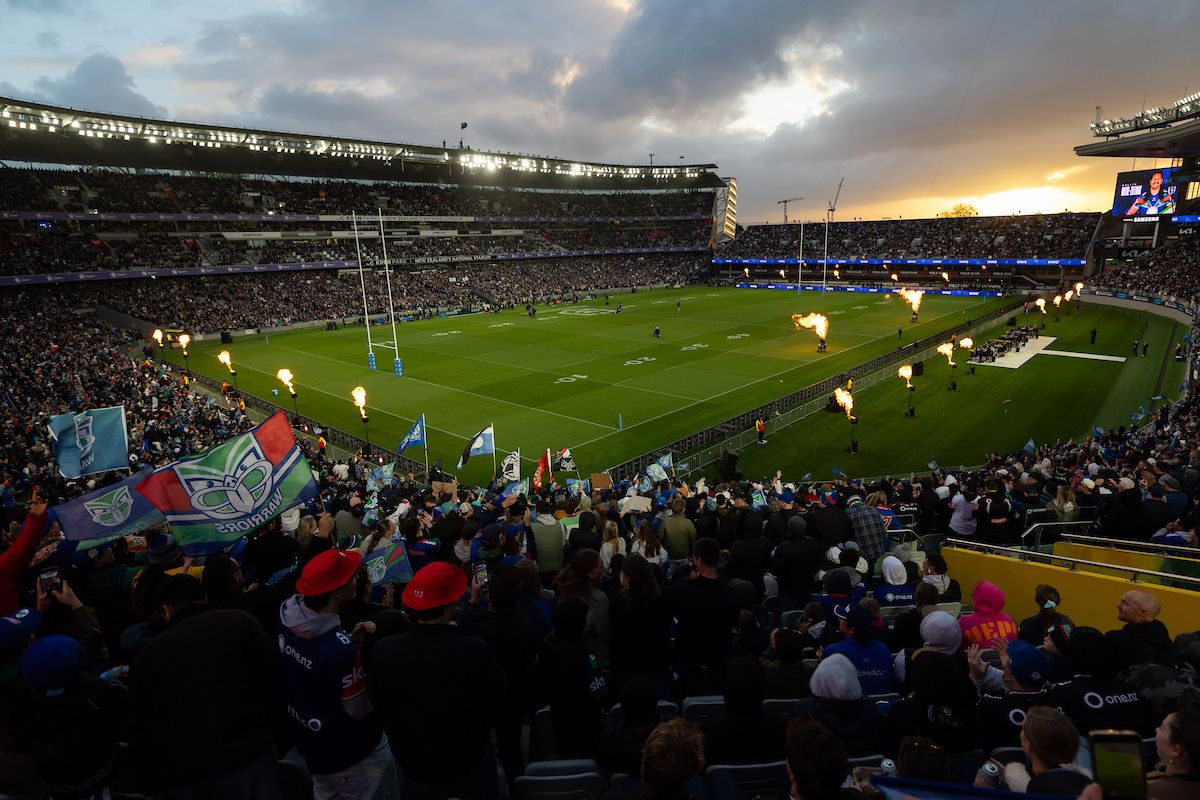






As you would expect, this week I want to reflect on the historic occasion we had the privilege of hosting at Eden Park on Sunday.
The result was not what the One NZ Warriors or their thousands of supporters wanted, but the scale and significance of the occasion were undeniable. With 48,511 fans packing Eden Park, Sunday’s match was not only the most attended National Rugby League Series Finals Week 2 game in history, but it was also the largest rugby league crowd ever in New Zealand.
That is an extraordinary achievement for the Warriors, the NRL and rugby league in this country. It shows the connection between this team and its supporters, but the record crowd alone doesn’t fully explain why the occasion felt so special.
For me, it began well before kick-off.
From 1pm on Sunday, over 5,000 fans came through the gates of the Outer Oval Fan Zone. Families, friends, and generations of Warriors supporters came together in their colours to enjoy the music, food, and entertainment; have their faces painted; make signs; and share in the build-up. These fans were not simply attending a game; they were making a day of finals football.
The arrival of the Warriors team bus is something I will never forget.
Outside the stadium, Warriors supporters filled Sandringham Road to greet the bus as it arrived – inside the gates, fans lined the Outer Oval service road and performed a haka as the team passed.
It is difficult to find words that adequately describe the noise, emotion and sense of pride in that moment. This was not a manufactured atmosphere – it came from the genuine connection Warriors supporters have with their team.
While this atmosphere belonged to the fans, a venue still has a choice: does it simply accommodate an event, or does it genuinely embrace it?
At Eden Park, we like to do things a little differently. We believe hosting an event involves more than preparing the field, opening the gates and ensuring everything runs to schedule. While the fundamentals are essential, they are only part of the experience.
A successful event also needs to make people feel something. It needs to recognise why the occasion matters, reflect the identity of the people attending and create a sense that they are part of something special.
From the moment the NRL match was confirmed, there was a shared determination to make sure the Warriors and their supporters understood that this was their occasion – we wanted Eden Park to feel like their home for the night.
Otis Frizzell created a mural in the players’ tunnel celebrating the Warriors and their connection with Eden Park. Our event-day staff wore commemorative T-shirts. The Outer Oval became a major fan zone, while the stadium and surrounding precinct were dressed in Warriors colours.
For one day, Eden Park became the Wah-Den of Eden.
None of those elements was essential to delivering the event, but together they sent a clear message to the team and its supporters: they were not simply playing at another stadium; this was their home for the night.
The reason why we like to do things differently at Eden Park is not for the spectacle, but because people remember how an occasion made them feel. The operational delivery may be largely invisible to a fan, but the welcome, the atmosphere and the sense of belonging are not.
The reaction from supporters reinforced why this matters. Throughout the day, our team had the privilege of meeting passionate Warriors fans who were genuinely grateful for the effort that had gone into welcoming them and recognising the significance of the match.
Creating an experience that resonated so strongly was made possible by considerable operational capability. But on its own, operational capability does not make an event memorable – that comes from combining experience and execution with an understanding of the occasion and the people at the centre of it. Sunday demonstrated the importance of both.
More than 3,000 people worked across the event, from our core Eden Park team through to catering, cleaning, security, entertainment, broadcast and match operations, and it was all brought together within one week.
Delivering an NRL finals match for almost 50,000 people at short notice requires much more than working harder for a few days. It requires experienced people, established systems, strong relationships and the ability to make decisions quickly without compromising safety, quality or the fan experience.
Sunday also showed why major events matter beyond the stadium gates. People travelled, gathered with friends and family, used public transport, visited hospitality businesses and spent hours soaking up the occasion.
The value of this was not confined to ticket sales or what happened during the 80 minutes of football – it extended into the surrounding precinct, the transport network and Auckland’s wider visitor and hospitality economy.
I could not be prouder of the way everyone involved responded.
I also want to acknowledge Cameron George and the entire Warriors organisation, along with the NRL. They unequivocally embraced the significance of the occasion and trusted our team to do what they do best.
The partnership between our organisations enabled us to move quickly, think creatively and deliver an experience worthy of the first NRL finals match played at Eden Park.
The result will remain disappointing for the Warriors and their supporters. But the record crowd, the scenes surrounding the team’s arrival and the atmosphere throughout the stadium demonstrated the strength of rugby league in New Zealand and the extraordinary support behind this team.
While the history books will record the attendance, what they won’t fully capture is the feeling inside and around Eden Park that day.
It was a privilege to host the Warriors, and we look forward to welcoming the team and its supporters back to Eden Park for the ANZAC Day game in April 2027.