





With the City Rail Link due to open later this year, the focus is naturally on how the new network operates – the trains, stations, routes and timetables that will change the way people move around Auckland. But the broader conversation is about what that connectivity enables.
For Auckland, the CRL is not only a transport project, it is a piece of critical city infrastructure that will help shape the kind of city we are wanting to become. If we are serious about Auckland being known internationally as a place where people want to live, work, stay and play, then connectivity has to sit at the heart of that ambition.
Having worked in and visited major event cities around the world, one thing has always stood out to me. The best-connected cities do not treat public transport as an optional extra – it is part of how the city functions. It is how people get to work, how visitors explore, how students move between home and study, how families access experiences, and how major events become part of the wider city rather than isolated moments in one location.
When transport works well, it changes how a city feels. It makes the city more accessible, more open and easier to participate in. It allows people to make decisions based on what they want to do, where they want to go, and who they want to spend time with, rather than beginning with the question of how difficult it will be to get there.
That is why connectivity matters. Cities do not become vibrant by accident. They require infrastructure that connects people to opportunity, employment, education, hospitality, tourism, culture, sport, entertainment and each other. Roads, rail, airports, ports, public spaces, stadiums and civic institutions all form part of the same system, and when those systems work together, cities perform better.
From my perspective, major events are a useful lens through which to understand this because they make the importance of connectivity highly visible. In stadium and event environments, we often think about the full customer journey from the sofa to the seat. This is a journey that begins well before someone scans their ticket at the gate – it often starts as early as the decision whether attending an event feels easy, accessible and worth the effort.
Public transport plays a major role in that decision. If the journey is efficient, intuitive and reliable, people are more likely to attend, arrive in a positive frame of mind and see the event as part of a broader city experience rather than a logistical challenge. For families, visitors, students, workers, older people and those who do not want to rely on using their own vehicle, accessible public transport can be the difference between participating and staying home.
That principle applies well beyond event days. A globally ambitious city is not only defined by what it builds; it is defined by how easily people can move between the places, opportunities and experiences that shape daily life.
I have seen this in cities such as Melbourne and London, where public transport is deeply integrated into the way major venues and precincts operate. In Melbourne, the MCG, Marvel Stadium, Rod Laver Arena and AAMI Park sit within a broader event ecosystem supported by rail, tram and pedestrian connections. In London, venues such as Wembley, Tottenham Hotspur Stadium, Twickenham and The O2 each play different roles, but their success is also shaped by how people move to and from them. In those cities, people do not always begin by asking where they will park – they think about which train, tram or underground line will get them there. The journey is part of the experience, not a barrier to it.
Auckland has extraordinary natural advantages, a strong cultural identity and significant ambition, but at times our infrastructure has not kept pace with the kind of city we want to be. It is not enough to have great destinations, talented people, major institutions and world-class experiences if they are not connected in a way that makes them easy to access and easy to enjoy.
This is why the CRL is so important. It represents an investment in Auckland’s future capacity. Not just transport capacity, but civic capacity: the capacity to connect more people across the city, support growth around key precincts, make Auckland more accessible for residents, workers, students, visitors and eventgoers, and help the city feel more joined up.
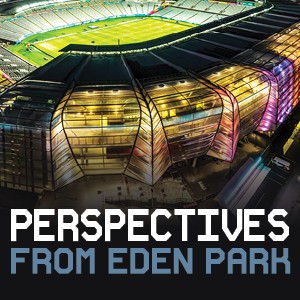
For Eden Park, improved connectivity will strengthen the role New Zealand’s national stadium plays within the wider city, but the opportunity is bigger than Eden Park. It is about Auckland thinking of its major assets as part of a connected city ecosystem, where the stadium, city centre, universities, hospitality precincts, hotels, public spaces, residential areas and transport links all contribute to the same question: how do we create a city that people want to be part of?
That question is important because infrastructure shapes behaviour. When a city is easy to move through, people are more likely to engage with it. They are more likely to attend events, work in the city, study in the city, visit more often and stay longer. Businesses benefit from increased activity, visitors leave with a stronger impression, and residents feel more connected to the place they live. The world’s most successful cities understand this.
The same principle applies to stadiums. A stadium is not only valuable because of what happens inside its gates. Its value is also in what it unlocks around it: hotel rooms filled, restaurants activated, transport networks used, jobs supported, memories created and civic pride strengthened. Transport infrastructure works in a similar way. Its value is not only measured by the number of journeys taken. It is measured by what those journeys make possible.
That is the conversation I hope Auckland has as the CRL prepares to open. There will always be debate about cost, disruption and timing. Major infrastructure is difficult because it takes time, investment and patience, but once it is delivered, the most important question becomes how intentionally we use it.
I’m excited about the CRL because I see it as part of Auckland’s next phase of growth. But its value will not only be measured by the number of journeys taken, but it will also be measured by what those journeys make possible – more people accessing work and education, more visitors experiencing the city, more businesses benefiting from activity, and more Aucklanders feeling connected to the place they live.
If we want Auckland to be known internationally as a city where people want to live, work, stay and play, connectivity is fundamental.