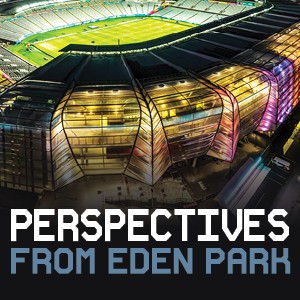






Unsurprisingly, this week’s article focuses on the changes to Eden Park’s local planning rules and the Government’s announcement that State of Origin will be played at Eden Park in 2027.
And equally unsurprising was the view held by some people that meaningful change to Eden Park’s operating settings would never occur – that the system was simply too complex, too entrenched, too difficult to shift.
Yet here we are.
After 125 years of history, reforming the framework governing our national stadium is not a minor operational tweak. It is a structural shift.
Change of this scale does not happen by accident. It happens because people are prepared to challenge long-held assumptions.
But what does it actually mean in practice?
I have already been asked when the first event under the new planning rules will take place. The reality is that major events are not secured in weeks or even months. In many cases, conversations with promoters, hirers and sporting bodies take years. These changes don’t provide an instant event; they provide flexibility. In the global stadium market, flexibility is key – it determines whether you can move quickly on an opportunity or be constrained by consenting settings that were never designed for modern stadium operations.
Eden Park sits at the top of New Zealand’s stadium infrastructure. We are the country’s only 50,000-plus seat stadium, a position that carries both opportunity and responsibility.
Unlike Australia, when global touring acts or major sporting properties look at New Zealand as an option, they are not necessarily choosing between multiple large-capacity venues. They are assessing one national option. That reality should inform how we enable and regulate the asset.
This is why flexibility in the regulatory framework matters. Without it, we are not competing on equal footing with cities such as Melbourne, Sydney or Brisbane – we are narrowing our own field of play before the contest even begins.
For many years, we have effectively operated with one hand tied behind our back. like a hotel that’s only allowed to host guests two nights a week. That constraint did not reflect modern stadium economics, and it didn’t reflect global touring models. And ultimately, it did not reflect the expectations of a country that wants to compete for major content, knowing the economic benefits the flow from events.
This last factor, being the Government’s recognition that major events contribute to economic growth, is an important part of this shift. When large-scale events come to Auckland, the impact extends far beyond the stadium gates. Hotels fill up, our restaurants, cafes and retail shops see an increase in trade, our transport networks are activated, and jobs are created.
This is not abstract theory. It is measurable economic activity.
For a country of five million people competing with cities across Australia that have larger populations and, in some cases, direct financial incentives for promoters, we cannot afford to constrain our primary national venue with outdated settings.
State of Origin in 2027 is a clear example of what flexibility enables. It is one of the most commercially powerful sporting properties in Australasia. It attracts interstate travel, premium hospitality demand and significant broadcast reach. Securing content of that level reinforces Eden Park’s role not only as a community asset for Auckland, but as a strategic asset for New Zealand.
At the other end of the spectrum, at the end of March, we will welcome beloved children’s entertainer, Emma Memma, for a picnic at Eden Park.
For many children, that picnic will be their very first experience inside a stadium. For parents and grandparents, it will be a moment to share something special. The scale may be different, but the significance is not.
That contrast is not accidental. It is intentional.
A national stadium must be capable of hosting the biggest international sporting contests and, in the same calendar, create space for the smallest hands clutching their first ticket.
From State of Origin to Emma Memma, the common thread is not size. It is experience. And delivering that breadth of experience depends on having a framework that enables us to respond to demand, not restrict it.
125 years ago Eden Park was carved out of swamp land to create space for sport.
Today, the responsibility is different. It is about ensuring our national stadium remains competitive, adaptable and relevant in a rapidly changing global market.
Flexibility is not excess. It is discipline.
It is how we protect an asset of national significance and position it to serve the next generation, not just for the next event, but for the next century.