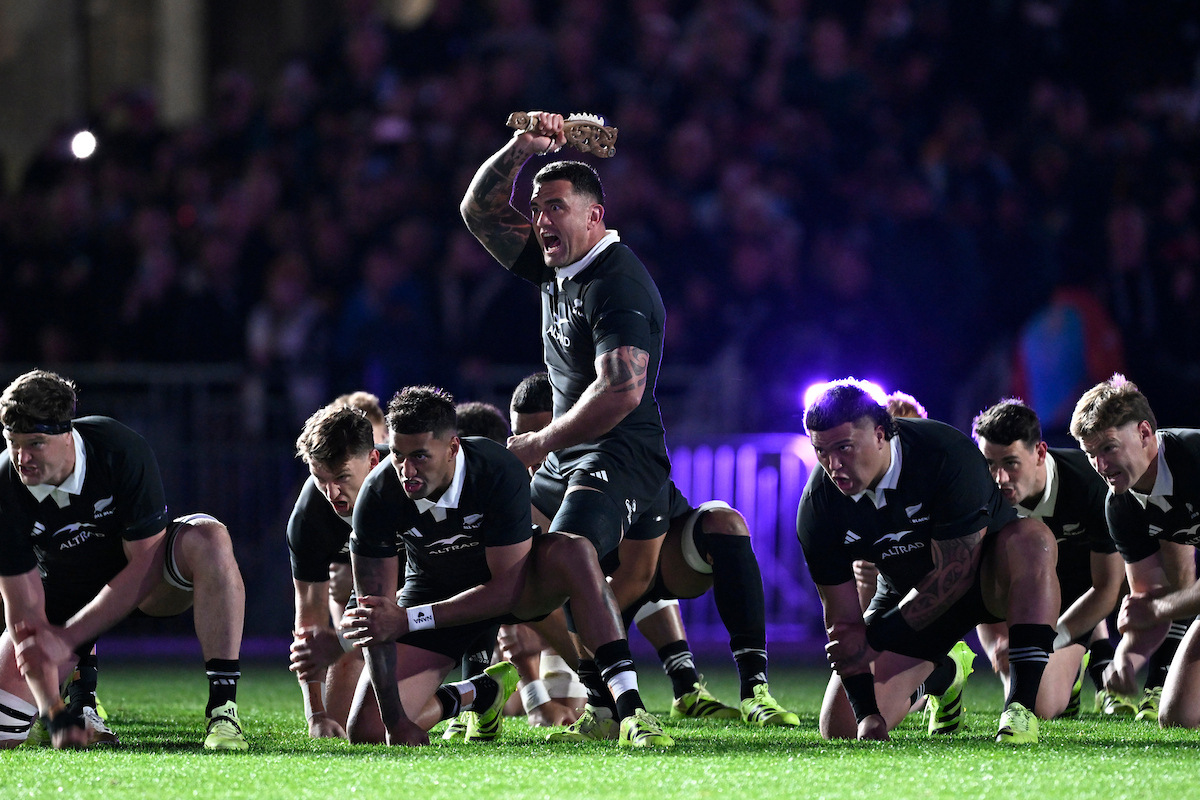






There is a particular feeling that builds at Eden Park before an All Blacks match.
You notice it in the days leading up to the game and, by the time the gates open, the anticipation is unmistakable. Then the bilingual national anthem begins, the haka echoes around a sold-out Eden Park, and The Fortress comes alive.
This Saturday, the All Blacks return to our national stadium to face Ireland as part of the Nations Championship. It will be the fifth time the two teams have played each other here, and continues a relationship between the All Blacks and Eden Park that stretches back more than a century.
The first All Blacks Test at Eden Park was played in 1921, when New Zealand faced South Africa. Since then, the venue has hosted generations of memorable rugby games, including the finals of the 1987 and 2011 Rugby World Cups.
There is no other venue in New Zealand with this depth of rugby history. It is not only found in the record books, but in the memories carried by the fans who’ve watched the moments live and the people who have played here.
I remember speaking with Eroni Clarke, who told me that three generations of the Clarke family have played on the hallowed turf. That has always stayed with me because it captures what Eden Park means to so many All Blacks and their families. Every player who has represented New Zealand here carries a memory of this place, and we love it when they return and share those stories with us.
This history is what has helped characterise Eden Park as The Fortress. The name represents more than an extraordinary playing record; it reflects the expectation that builds when the All Blacks take the field, the connection supporters feel with the ground and the generations of players and fans who have contributed to its identity.
As Ardie Savea declared during the 2025 game against South Africa, “This is our house.”
Ireland will arrive understanding exactly what that means.
They are one of the world’s leading rugby nations and bring with them a passionate and vocal fan base. On Saturday, our stands will be filled with 50,000 supporters dressed in black or green, creating the kind of atmosphere that makes international rugby so compelling. A sold-out stadium is ultimately the market giving its verdict on the content: two outstanding teams, a historic venue and a contest people believe they need to experience in person.
The scale of the occasion is significant.
A full Eden Park means welcoming a population comparable to the city of Nelson into the stadium in a single evening. It also represents close to 1% of New Zealand’s population gathered in one place for one shared experience.
Around 47% of ticketholders are expected to come from outside Auckland, bringing tens of thousands of people into the city. They will stay in accommodation or with friends and family, use transport, visit restaurants and bars, and spend across the wider visitor economy.
They may arrive as ticketholders, but many will leave having experienced much more of Auckland.
For the stadium team, a sold-out event also represents a major operational exercise.
More than 3,000 people will work across the day, including teams supporting operations, hospitality, catering, cleaning, security, traffic management, transport, broadcast and customer service. We have also brought in experienced catering staff from Wellington, Brisbane and Adelaide to work alongside our local teams.
Together, they will temporarily operate something that resembles a small city.
Tens of thousands of people need to arrive, move through the surrounding precinct, enter through the gates, find their seats, access food and beverage, use the stadium’s facilities and leave safely at the end of the night. Every part of the venue will be tested in real time, from the turnstiles, screens and Wi-Fi through to the kitchens, bathrooms, lighting and security systems.
The scale can also be seen in some of the more practical details behind the event.
We will sell thousands of punnets of chips, burgers, fish tacos, and hot dogs throughout the evening, and while these may be stadium favourites, our in-house chefs have also created a menu inspired by Irish deli food to welcome the passionate Irish supporters who’ll be here cheering on their own team.
Curry and chips, cheesy curry chips, and chicken fillet rolls will be available across our food outlets exclusively for the match. It is a small but meaningful part of the welcome and a reminder that the best event experiences are built through details that show the audience has been understood.
All 60 permanent food and beverage outlets around the stadium will be operating, along with 30 food trucks located on our Western end Eat Street. This will sit alongside a substantial corporate hospitality programme across our suites, lounges and premium spaces.
When an event is delivered well, most of the work behind it is invisible.
Supporters should be able to arrive, scan their ticket and have a great time. Our job is to create the conditions for that experience, so they can become part of the occasion and leave still talking about the atmosphere, the key moments and the final score.
They should not need to think about the months of planning, operational meetings or thousands of decisions that make the evening possible. Exceptional event delivery cannot be manufactured on the day. It is built through continual investment, operational discipline, attention to detail, strong collaboration and people who know how to perform under pressure.
While Saturday’s game remains at the centre of the experience, the event itself is much more than the 80 minutes on the field. It includes the journey to the venue, the welcome at the gate, the atmosphere, the food, the hospitality, the quality of the facilities and how people feel when they leave.
That is what hosting at this scale requires: delivering the fundamentals seamlessly while creating an occasion people will remember.
Saturday also reinforces why premium content matters – people travel for experiences they consider unmissable. It shows why infrastructure matters – national moments need venues capable of hosting them at scale, and why reputation matters, because teams, fans and rights holders need confidence in the host.
Most importantly, it reminds us why shared experiences still matter.
Some people in the crowd will have attended All Blacks Tests at Eden Park for decades. For others, it will be their first time hearing the haka inside The Fortress. Children in the stands may remember the evening for the rest of their lives, just as previous generations remember where they were when the All Blacks lifted the Webb Ellis Cup here in 1987 or 2011.
That is the privilege and responsibility of leading a venue with this history. We are custodians of the memories already created here, but we are also responsible for making sure new ones continue to be made.
On Saturday night, The Fortress will be full, the city will be alive, and thousands of people will work together to deliver one of the country’s biggest sporting occasions.
And when the anthem begins, the haka starts, and Eden Park finds its voice, another chapter in more than a century of All Blacks history will be written here.