




I have an office at Eden Park and a laptop sitting on my desk, but the reality is that I spend a large part of my working day somewhere else in the stadium. When your workplace stretches across 50,000 seats, technology becomes an important part of staying connected to the people, information and decisions that keep the business moving.
It might start with our turf team, walk through a project with facilities, meet a contractor on site, catch up with operations or catering, spend time with our memberships or commercial teams, or walk with our communications team while they are filming content for social media or coordinating a media interview somewhere around the venue. In between, I am meeting partners, hirers, promoters, and other stakeholders.
There is real value in being close to the work and close to the people doing it. Being physically present across the stadium gives me a perspective that is difficult to get from a report, photograph or scheduled meeting alone. I can see the condition of the turf for myself, understand how a project is progressing, hear directly from the people doing the work and often pick up on small details that can make a significant difference when tens of thousands of people come through the gates.
Some of those conversations are planned while others simply happen because I am walking through the stadium and see something that needs attention or someone I need to speak with. For me, that proximity means I see more, hear more and can often understand an issue much more quickly than I would from behind a desk.
On an event day, this becomes even more important.
Once we are preparing to open the gates, I am rarely in one place for long. I might be checking in with operations, walking crowd routes, speaking with security, visiting hospitality areas, catching up with catering, meeting a hirer or promoter, speaking with media or moving between different parts of the venue as the day unfolds.
When the stadium is full, you also see the business differently. You can watch how people move through the venue, where queues form, how information is being received, how hospitality spaces are working and where small points of friction might exist. When 40,000 or 50,000 people are moving through the same environment, small details matter.
The challenge, of course, is that the rest of my job does not stop while I am walking around the stadium.
Emails still need to be answered, presentations need to be reviewed, documents and information need to be accessed, and decisions often need to be made in the moment. As you would imagine, carrying a laptop around the stadium all day is not particularly practical, so my phone has increasingly become the tool that allows me to stay connected while I am somewhere else in the venue.
Our office space is still important. It is where teams come together, conversations happen and relationships are built, and I place a lot of value on that physical connection.
But when your workplace stretches across a 50,000-seat stadium, the reality is that we are constantly interacting with people in different parts of the business. I can move from a conversation with turf to facilities, operations, catering, communications or commercial, then into a meeting with a partner, hirer or promoter, often without going anywhere near my desk.
Technology is what allows me to keep working while all of that is happening. I still need access to emails, files, presentations, contact details and information, but I need it in the places where the conversations and decisions are actually taking place.
For me, that is where technology is most useful. It should make it easier to do the job, remove friction and give people access to what they need when they need it.
Our partnership with Samsung has given us the opportunity to think about technology in that way across Eden Park. Most people will naturally associate Samsung with our Superscreen and screen network throughout the venue, but technology also plays a much less visible role in how we work, communicate and stay connected across an asset of this size.
For me personally, the value is simple. My phone gives me access to the information I need without requiring me to return to my desk every time I need to check a document, review a presentation or respond to something that cannot wait.
It also allows me to capture what is happening around me.
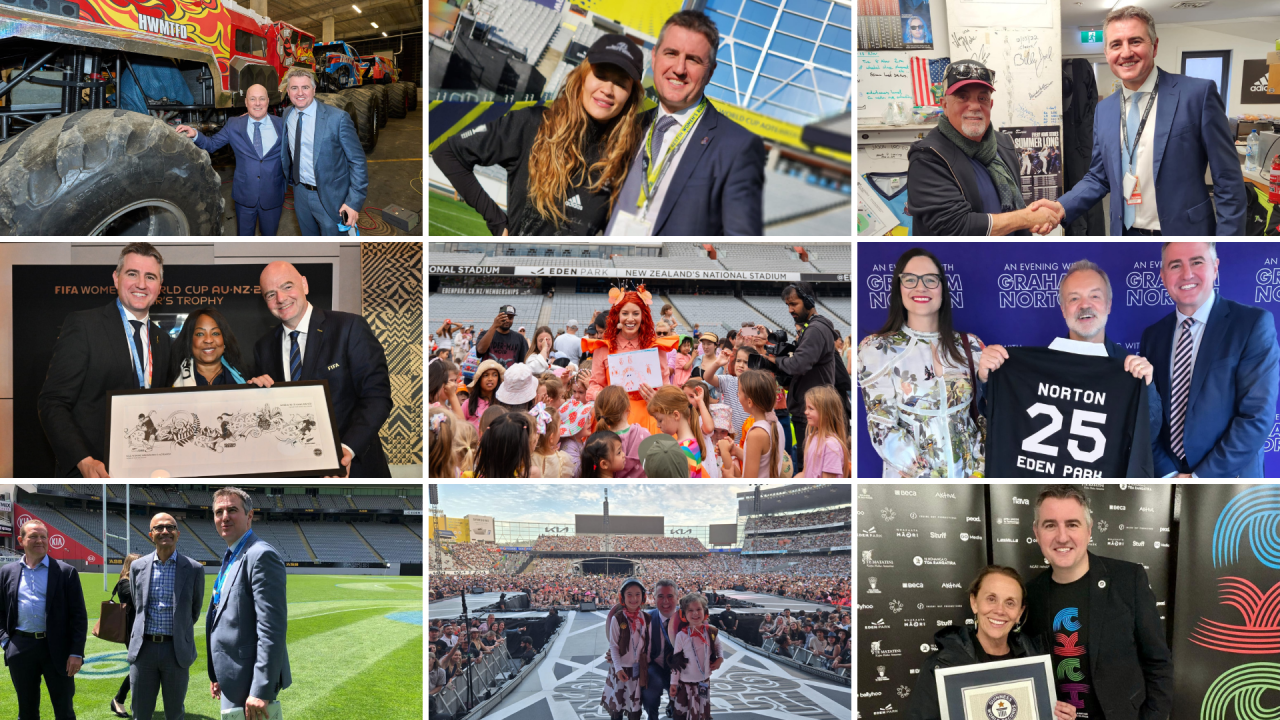
Some of the photos I have chosen to share with this article were taken in memorable moments as they happened. They are not formal portraits or carefully planned photographs; they are snapshots of conversations, events, people and experiences happening around the stadium in real time.
A venue like Eden Park creates moments constantly, not only for the people in the stands but for the teams, athletes, artists, partners, contractors, hirers and others who are part of bringing those events to life. Being out in the stadium means you are often there when those moments happen.
The same device that gives me access to an email, file or presentation can also capture a moment in front of me and allow our communications team to share it almost immediately.
From a leadership perspective, I think there is a broader lesson in all of this.
As organisations grow, it can become very easy for leaders to spend more time looking at information about the business and less time actually being in the business. Reports, meetings and data are all important, but they do not replace spending time with people and seeing the environment in which the work is actually happening.
Technology should make that easier, not harder. It should give leaders the ability to stay connected to the information they need while remaining close to the people, customers and experiences their decisions affect.
In the events industry, where so much of the business is physical and happens in real time, that matters enormously.
I have always believed Eden Park should be a blank canvas for creativity, and many of the ideas we have introduced over the years have come from walking through the stadium, seeing a space differently or having a conversation that leads somewhere unexpected.
Those opportunities are much easier to see when you are out in the business rather than waiting for the business to come to you.
There are still times when I need to sit at my desk, open my laptop and focus on something without interruption. But when your office is a 50,000-seat stadium, a large part of the job is making sure you are out in it.