





While we all know how to describe the infrastructure that makes a city work – roads move people, rail connects communities and airports connect us with the world, it can be harder to define what makes a city feel alive.
Parks, theatres, galleries, museums and public spaces all play an essential role. They give us places to meet, think, create, learn and participate in the life of our city.
But where do we come together at scale?
Where can 50,000 people all experience the same moment? Where can a city welcome the world and place itself in front of a global audience? Where do moments happen that are still being discussed decades later?
This is the distinctive role a stadium has.
We typically think of stadiums as places where events are held. We assess them through the lens of attendance, utilisation, operating costs and revenue, and when public investment is involved, we calculate visitor nights, employment and GDP contribution.
While these are important measurements, they miss something fundamental.
A great stadium is not simply an event venue. It is part of the social and cultural infrastructure of a city. It provides a focal point for shared experience, holds generations of memories and helps shape how a city or country sees itself.
One way to understand this is to imagine some of the world’s great cities without their stadiums.
What would Melbourne lose without the Melbourne Cricket Ground? What would London lose without Wembley, or Boston without Fenway Park? And while Rome would still be Rome without the Colosseum (which is technically an amphitheatre rather than a stadium), remove it from the city and something significant disappears. Not simply an ancient structure or a tourism attraction, but part of the way Rome is understood by its own people and by the rest of the world.
The same is true for the MCG. The Australian Government’s National Heritage listing says the venue has assumed an identity beyond that of a sporting ground. It has become part of the fabric of Melbourne and Australia through the events, traditions and memories attached to it.
This does not happen because a venue has a certain number of seats. It happens because people repeatedly come together in the same place and attach meaning to what occurs there.
International researchers have described stadiums as the “sleeping giants” of the tourism industry. A study published in the Journal of Sport & Tourism, based on more than 28,000 visitor reviews across 44 English stadiums, found that people experience them as museums, heritage attractions, event destinations and places of pilgrimage.
People visit these venues even when there is no event. They want to stand where history happened and feel a connection to moments they might have only experienced through a screen or the stories of others.
This tells us something important about the value of a stadium.
Most infrastructure is valued for the function it performs, whereas a stadium becomes valuable through the meaning people attach to it.
You can replace a road and it remains a road. You can replace an office building and work continues. But you cannot relocate more than a century of history. You cannot manufacture the memories and traditions that have accumulated around a place over generations.
You also cannot easily replicate what happens across a city when a major stadium event takes place.
The effect begins well before the gates open. People get excited. Visitors arrive. Hotels fill. Restaurants and bars become meeting places. Public transport carries people towards a common destination. Team colours and concert merchandise appear across the city.
For a few hours, the stadium becomes the focal point around which the city moves.
Without stadiums, cities would continue to function and our other cultural and public spaces would continue to enrich our lives but we would lose one of the few places capable of turning tens of thousands of individual experiences into one shared moment.
This is why stadiums sit at the heart of cities.
However, they do not occupy that position by right.
A large building that opens occasionally and remains disconnected from the people around it is not the heart of anything. Without ambition, stadiums can become underused, financially unsustainable or irrelevant. Around the world, there are venues that were built for a single moment but never became part of the cities they were intended to serve.
A stadium earns its place at the heart of a city by remaining active and relevant. It welcomes different audiences, creates new memories and evolves with the city around it and importantly it respects its history without allowing that history to become its only reason for existing.
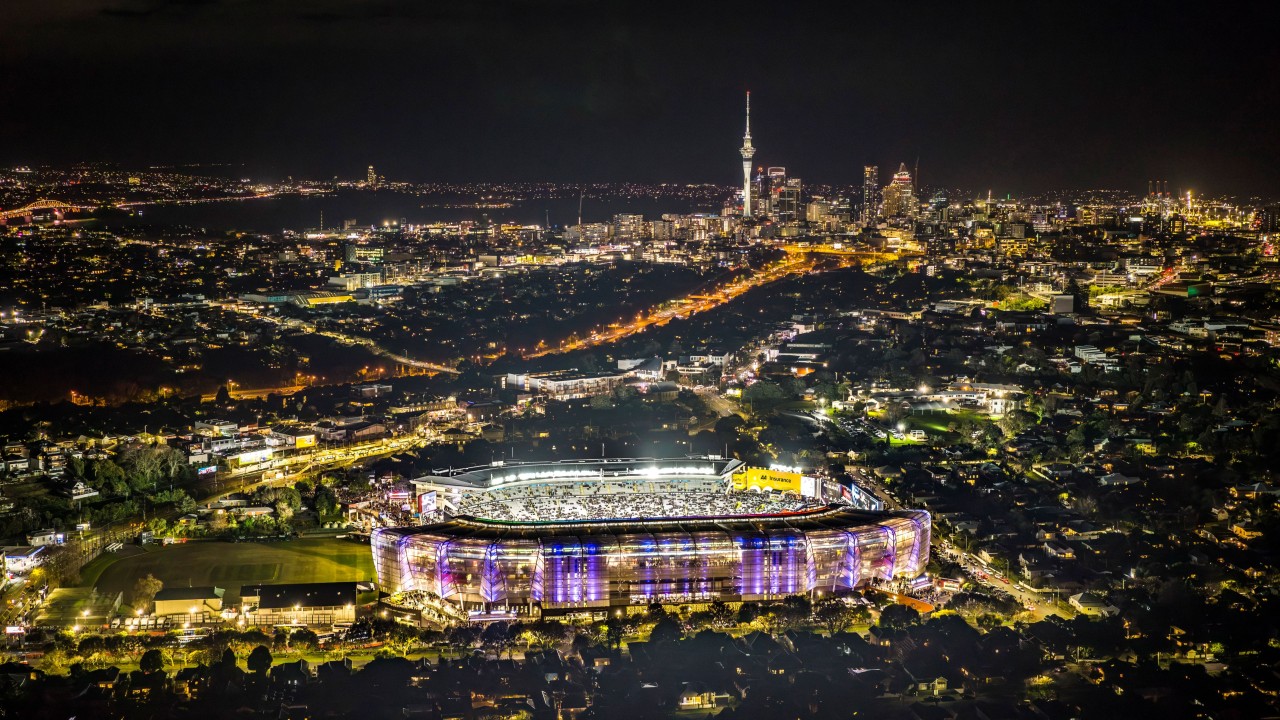
For more than 125 years, Eden Park has provided a place for Auckland and New Zealand to come together. It has hosted moments of sporting triumph and disappointment, international tournaments, concerts, cultural celebrations and community experiences.
People remember who they were with, where they sat and how they felt. Those memories are personal, but collectively they become part of the story of the venue and the country.
Eden Park’s recognition in law as New Zealand’s national stadium acknowledges that history and the role the venue holds in our national life, but we know it’s not a licence to stand still.
If Eden Park is to remain at the heart of Auckland and New Zealand, it must continue to give people reasons to gather. It must remain genuinely multi-purpose and create space for sport, entertainment, culture, community and recreation. New generations need opportunities to develop their own connection with the venue, rather than simply hearing about what happened here in the past.
A heart has to keep beating.
This is why attracting and hosting a diverse range of events matters. The outcome is not only greater utilisation or economic return. It is a city with more energy, more shared experiences and more moments that connect its people with one another and with the world.
Auckland would still function without Eden Park. But what would it lose?
It would lose more than a venue. It would lose a place where generations have gathered, where New Zealand has welcomed the world and where some of our biggest shared moments have taken place.
Stadiums matter because while they’re not the only places that give a city life, they are among the few places where the life of an entire city can converge.
This is what puts stadiums at the heart of a city.