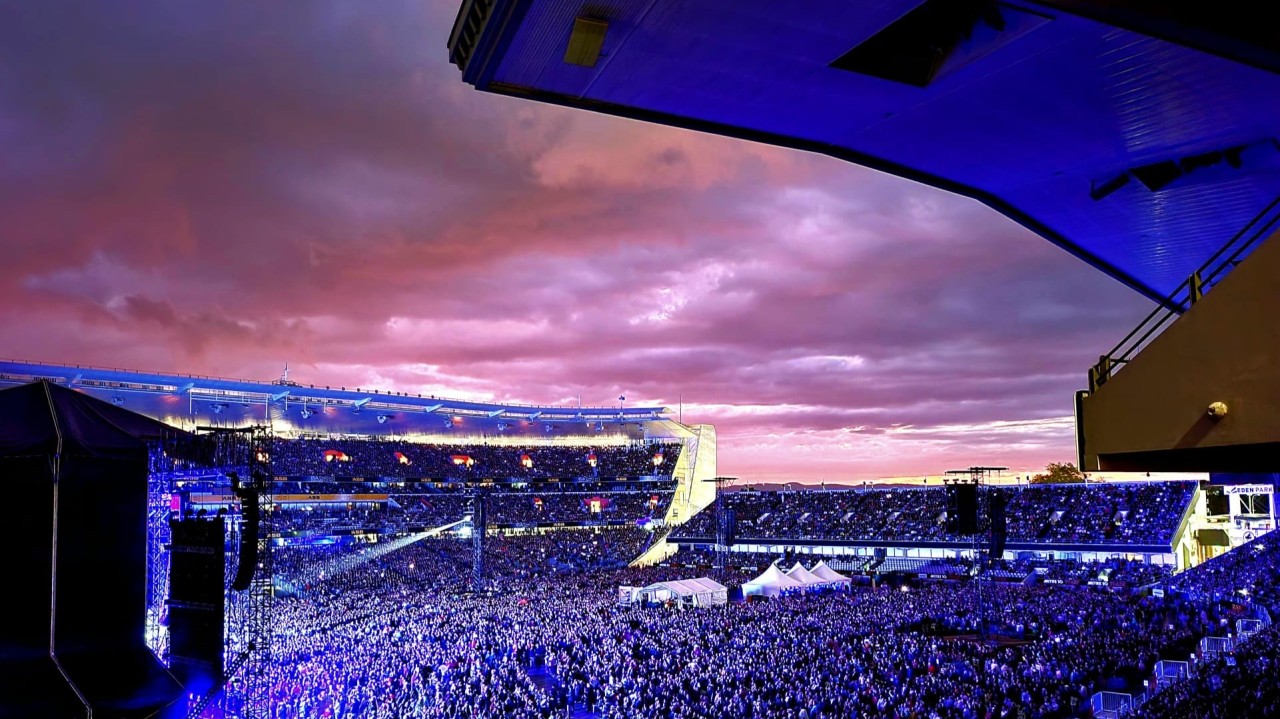






“It’s on in Auckland.”
This was the theme Annie Dundas from Tātaki Auckland Unlimited discussed at an event I attended this morning as part of the New Zealand Events Association conference.
It is a simple phrase, but for me, it captures something important. People want to live in a city where things are happening, a city that is vibrant, ambitious, and offers strong economic opportunities. They want concerts and shows to look forward to, sports matches to attend, cultural experiences to share and moments that bring a city to life.
As Annie said, we all have a role to play in ensuring events like these happen.
I would take that idea one step further. It’s not just Auckland that should be a city where people want to live, stay, work and play; New Zealand should be a country where people want to live, stay, work and play.
And if this is what we want for our country, then we need to be prepared to invest in it.
Some of the responses to my recent call for a permanent approach to major event funding got me thinking about whether we fully understand the economics of events and the wider value they create.
If asked, most people would say they want New Zealand to host major events. They want international sporting fixtures, global artists, cultural occasions and the opportunity to see the world’s best performers here rather than having to get on a plane to see them overseas.
But wanting major events and being prepared to invest in securing them are not always treated as the same thing.
I have heard major event funding described as a grant or a subsidy – framing which tends to focus entirely on the money being put into the event rather than the economic activity which the investment helps unlock.
The return on investing in events is real and has been demonstrated time and again. It’s not just the ticket revenue; it’s the wages, visitor spending, business revenue and taxable economic activity, which is spread across hotels, cafés, bars, restaurants, retailers, transport providers, suppliers and the thousands of people who are involved in planning and delivering the event.
Seen in that context, major event funding is not simply support for a promoter, event organiser or venue. It is an investment in a much wider economic ecosystem.
But the return goes beyond economics.
You cannot give a country a reputation as a grant, and you cannot subsidise its standing in the world. Reputation is built over time through the choices we make, the experiences we create and the way we present ourselves internationally.
This is why I believe major event funding should be understood as investment, and it’s a principle widely accepted in other parts of the economy.
We invest in tourism and have Tourism New Zealand promoting our country internationally because visitors create economic activity across accommodation, hospitality, transport, retail and regional businesses. We invest in screen production because films and television programmes create jobs, develop capability, attract international expenditure and showcase New Zealand to audiences around the world.
We support science, innovation and export development because we understand that some investments create benefits far beyond the organisation or industry receiving the initial support.
Yet when it comes to major events, we establish short-term programmes, respond to individual opportunities and debate each contribution as though the only beneficiary is the event organiser, promoter or venue.
This approach misses the wider picture.
When someone buys a ticket to a concert or sporting fixture, they are not simply purchasing a seat and a few hours of entertainment. Their decision supports a much wider chain of economic activity.
People are employed to plan, promote, build and deliver the event. Stadium staff, security teams, production crews, caterers, cleaners, broadcasters, contractors and transport operators all play a part.
Local businesses provide food, equipment, technology, temporary infrastructure, accommodation and professional services. Artists, performers and suppliers are engaged. Skills are developed, and experience is gained that can be carried into the next event.
When people travel to attend, the economic impact extends even further. They stay in hotels, eat in cafés and restaurants, visit bars, use public transport, shop in retail stores and often spend time exploring more of the city or country.
They may arrive as ticketholders, but they also become customers of the city and, in many cases, tourists in New Zealand.
The cafés do not complain when their tables are full. Hotels do not object when their rooms are booked. Bars, restaurants and retailers do not question the value of additional customers coming through their doors. Nor do the people who are employed to build the stage, secure the venue, serve the food, operate the transport network or deliver the event.
I appreciate that one of the challenges with the concept that major event funding is an investment is that while the investment used to help secure an event is highly visible, the return is often widely dispersed.
While the funding may appear as one figure in an event announcement, and the tickets are sold by one organisation, the value does not sit solely inside the venue or with the event organiser. It spreads through hospitality, accommodation, transport, tourism, retail and the wider visitor economy. It begins before the gates open and continues long after the final whistle or encore.
This is the halo effect of major events. But importantly, the value is not only economic.
In the same way that tourism and films help shape how the world sees New Zealand, major events support ‘Brand New Zealand‘.
An international sporting fixture, global concert or major cultural occasion creates broadcast coverage, media attention, social content and conversations that travel far beyond the people inside the venue. They demonstrate that New Zealand is capable of delivering at scale and show that we are connected to the world and confident enough to welcome it here.
This matters because reputation has real value.
It influences where people choose to visit, study, work and invest. It shapes how international organisations, sporting bodies, artists and promoters perceive New Zealand, and it helps determine whether we remain part of global touring, sporting and cultural conversations.
Major events also contribute to how New Zealanders feel about their own country. They create moments of shared experience, civic confidence and national pride and give people something to anticipate and something to remember. They make our cities feel active, relevant and connected to the wider world.
New Zealand is competing against cities and regions that deliberately use major events as part of their tourism, economic development and destination strategies. Many of those markets have larger populations, greater scale and established long-term funding mechanisms. The reality is that even if a global tour or sporting property might be considering Australasia, New Zealand is not guaranteed a place on the schedule simply because we would like one.
If we decide not to invest, the event does not necessarily disappear. It goes somewhere else, which also means the visitors, hotel nights, jobs, hospitality spending, international exposure and opportunity to strengthen the country’s reputation disappear.
Choosing not to invest has economic and reputational consequences too.
That does not mean every event should receive public investment, or that every opportunity will deliver the same return. In fact, this is precisely why a permanent major events framework needs to be disciplined. It should be capable of assessing potential events against clear criteria, including visitation, economic activity, employment, international exposure, strategic alignment and long-term value. The objective is not to fund everything, but to identify the events that can deliver the strongest return for New Zealand and give us the ability to compete for them with greater certainty.
The question is therefore not whether every event deserves funding; it is whether New Zealand genuinely wants to be a country where things happen.
Do we want people to visit, stay longer and spend more? Do we want cities that feel vibrant and connected? Do we want New Zealand workers and businesses to benefit from a strong event economy? Do we want our country presented positively to international audiences?
If the answer is yes, then we need to be prepared to invest in making that happen.
We already invest in bringing visitors to New Zealand. We invest in productions that show our landscapes and capabilities to the world. We invest in industries that create jobs, develop talent and strengthen our international position.
Major events should be viewed through the same lens.
They are an investment in employment, tourism and business activity. They are an investment in the vibrancy of our cities and the confidence of our communities. They are an investment in ‘Brand New Zealand’, and in a reputation we are rightly proud of.
The event itself may last only a few hours. Its halo can extend much further.