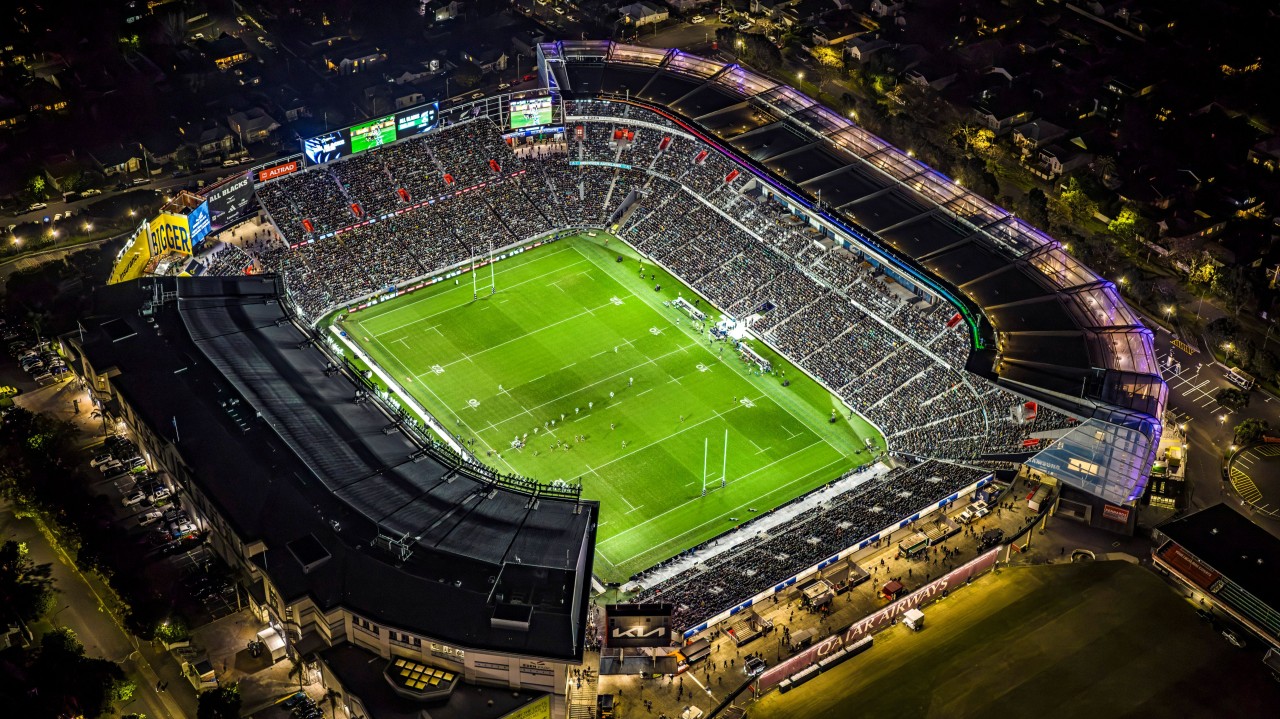






“Eden Park for an All Blacks game is peak New Zealand brand coming to life.”
I came across this statement recently in a LinkedIn post, and it resonated with me.
Saturday night brought together everything that makes an All Blacks test at Eden Park significant. A sold-out crowd of almost 50,000 fans filled the stands, more than a century of history as the home of rugby in New Zealand shaped the occasion, the traditions surrounding the team were on full display, and more than 3,000 people worked across the stadium and surrounding precinct to deliver the experience.
The result also mattered, with the All Blacks extending their unbeaten record at Eden Park to 53 matches and reinforcing a record that has become part of the identity of The Fortress. But what stayed with me was not only the result; it was the way the occasion reflected New Zealand on one of its biggest stages.
As the country’s largest stadium, Eden Park reflects ‘brand New Zealand’. That is perhaps most obvious when the All Blacks are playing, because few experiences bring together our sporting history, culture, performance and national identity as clearly as an international test at Eden Park. The All Blacks are one of New Zealand’s most recognised global brands, and their relationship with our national stadium has been built over more than a century.
However, ‘brand New Zealand’ coming to life at Eden Park is not limited to rugby. We saw it when Coldplay transformed the stadium into a sea of light, music and colour across three sold-out nights. We will see it again when Tottenham Hotspur play Auckland FC this weekend, when India plays cricket at Eden Park later this year, when Robbie Williams takes the stage, when the Warriors host their ANZAC Day fixture and when State of Origin comes to Auckland in 2027.
It is also reflected through events such as Permobil Power at the Park, which creates an opportunity for people living with disabilities to experience the stadium, participate and feel genuinely included in a place of national significance.
Each of these events and experiences will attract a different audience and create a very different atmosphere:
- Tottenham Hotspur brings one of world football’s most recognised clubs to New Zealand and gives local fans the opportunity to experience international football at scale.
- An Indian cricket match will bring colour, energy and the passion of one of the world’s largest sporting communities.
- The Warriors’ ANZAC Day fixture will combine rugby league with the history and significance of the occasion.
- Robbie Williams will bring generations together through music and entertainment.
- State of Origin will bring one of Australasia’s most intense sporting rivalries to New Zealand.
While the content we host may change, each event provides an opportunity for people to experience New Zealand through our culture, sporting identity, hospitality, creativity and ability to deliver world-class occasions at scale. That is where the experience economy and ‘brand New Zealand’ intersect.
Initiatives such as Permobil Power at the Park also matter because the experience economy should not be measured only by the size of a crowd or the profile of the content. It should also be measured by who is able to participate, how welcome they feel and whether our national stadium reflects the diversity of the country it represents.
The experience economy is often described as people choosing to spend money on experiences rather than products, but its significance is much broader. People are not simply purchasing access to a match or performance. They are choosing atmosphere, connection, escapism and the opportunity to share a moment with others.
On Saturday night, rugby was the central content, but the complete experience was much bigger than the match itself. It included the build-up, the presentation of the teams, the bilingual national anthem, the haka, the crowd, the hospitality, the screens, the technology, the food and beverage, and the way people were welcomed into the venue.
Together, those elements shaped how people felt about the event, Eden Park, Auckland and, for many visitors, New Zealand.
This is what makes major events such an important expression of brand New Zealand. A country’s brand is not shaped only through advertising campaigns, tourism imagery or what people see online. It is shaped through lived experience and through what people see, hear and feel when they spend time here.
It is also about reputation. New Zealand Story describes a strong country brand as one grounded in our values and capable of strengthening New Zealand’s reputation, international engagement and ability to compete globally. Its ‘brand New Zealand’ proposition centres on care for people and place, ingenuity, manaaki and integrity.
Those qualities can be experienced through the events we host. They are reflected in how we welcome teams, artists and visitors, how we present our culture, how we care for people attending the venue and how we deliver complex international events. For audiences watching through broadcast and digital channels, those same moments provide a window into New Zealand.
In that sense, Eden Park does not simply reflect ‘brand New Zealand’, as the country’s largest stadium and the stage for many of its most visible moments, it helps support and strengthen New Zealand’s reputation.
For an international visitor attending an All Blacks test, ‘brand New Zealand’ may be experienced through the haka, the bilingual national anthem, the atmosphere of The Fortress and the welcome they receive. For someone watching the broadcast overseas, Eden Park becomes a window into New Zealand. For visitors attending Coldplay, it may be experienced through Auckland’s ability to embrace and deliver one of the world’s largest tours. When India plays cricket here, it will be experienced through a city and stadium that reflect the diversity and energy of modern New Zealand.
Each event tells a different story, but together they provide a broader picture of who we are. They turn qualities such as culture, creativity, performance, hospitality and connection into something people can experience for themselves.
Eden Park’s role within that is significant because the venue is already embedded in New Zealand’s national story. For more than 125 years, it has hosted moments that have shaped how New Zealand sees itself and how the world sees us. Rugby and cricket are central to that history, but the story has continued to broaden through FIFA World Cups, Black Ferns tests, rugby league, concerts, Te Matatini, cultural and community events and international performances.
That history gives every event held here an additional layer of meaning. People are not entering a stadium, they are entering a place associated with generations of athletes, performers, supporters and defining national moments. Every new event becomes part of that history, and every audience becomes part of the story.
This is also why diversity of content matters. ‘Brand New Zealand’ cannot be represented by one team, one sport or one type of event alone. New Zealand today is culturally rich, diverse and globally connected, which is why we are committed to delivering an event calendar that reflects that.
The All Blacks remain one of the clearest expressions of New Zealand’s international identity, but brand New Zealand is also reflected through the Black Ferns, the Warriors, international cricket and football, Māori culture, music, creativity and the many communities that come through our gates. A diverse calendar gives more people the opportunity to see themselves reflected in the venue and provides more reasons for international visitors to come to Auckland and experience New Zealand for themselves.
That activity also generates significant economic value. People attending major events stay in hotels, dine in restaurants, visit bars and retailers, use public transport and spend time across Auckland. They may arrive as ticketholders, but many leave as tourists.
The economic contribution is important, but it is only one part of the value created. Major events also build confidence and civic pride. They give people reasons to come together, contribute to the energy of the city and demonstrate to international teams, artists, promoters and rights holders that New Zealand can deliver world-class experiences.
Every successful event becomes proof of New Zealand’s capability and contributes to our international reputation. The economic value comes from attracting people, generating visitation and encouraging them to spend time across the city, while the brand value comes from what they experience, remember and say about New Zealand afterwards. The strongest events deliver both.
That creates a responsibility for those of us who operate major venues. It is not enough to provide the field, stage and seats. Every part of the journey contributes to the experience, from transport and arrival through to hospitality, cultural presentation, technology, safety, service and atmosphere. Those details influence whether an event feels routine or memorable and whether people leave wanting to return.
Saturday night was a clear example of that responsibility and opportunity coming together. The All Blacks extended their unbeaten record at The Fortress to 53 matches, almost 50,000 people experienced international rugby at its highest level, and more than 3,000 people worked across the stadium and precinct to make the occasion possible.
Its significance, however, extended beyond the result. It reflected New Zealand’s history, culture, performance and hospitality. It brought people together, created economic activity across Auckland and presented a confident and distinctive image of New Zealand to audiences here and around the world.
This is why the original statement resonated with me. An All Blacks game at Eden Park is peak ‘brand New Zealand’ coming to life, but so too are the many other experiences that fill the stadium, from international football, Indian cricket and State of Origin to Coldplay, Robbie Williams and Permobil Power at the Park.
The content, audience and atmosphere may change, but Eden Park continues to provide the setting where ‘brand New Zealand’ can be experienced, shared and remembered. That is the experience economy at its best. It does not simply give people something to attend; it gives them a way to experience who we are.