





I was recently given a Blake Weston original artwork to mark my 10 years as CEO of Eden Park. Blake called the piece The Man Behind the Moments, which was a generous description, but what I appreciated most was not seeing myself in the artwork; it was seeing Eden Park through someone else’s eyes.
His work captured the moments, the people and the memories that make Eden Park a very special venue, and it reminded me that while stadiums are often defined by sport, concerts and major events, they can also be powerful platforms for creativity.
I’ve always loved art. Not only because of the talent and imagination involved, but because of how it can capture a moment, tell a story or reveal something about a person or place that words sometimes cannot. Blake’s artwork was powerful because it reflected Eden Park not simply as a stadium, but as a place shaped by people, emotion, history and shared experiences.
Art doesn’t just fill our walls and spaces; it tells stories. More importantly, it reminds us that creativity has the power to change how people experience a place, and this is one of the reasons we often describe Eden Park as a blank canvas for creativity.
This may sound unusual for a stadium, but increasingly, the world’s leading stadiums are becoming cultural destinations as much as sporting and entertainment venues. They are places where stories are told, creativity is encouraged, and experiences extend well beyond event day – this is how we think about Eden Park.
When we talk about creativity, we are not only talking about paintings or sculptures, we are talking about finding new ways to activate spaces, showcase talent, create memorable experiences and encourage people to see a familiar place differently. Whether it is art, hospitality, events, technology or community programmes, creativity is what allows a venue to continue evolving.
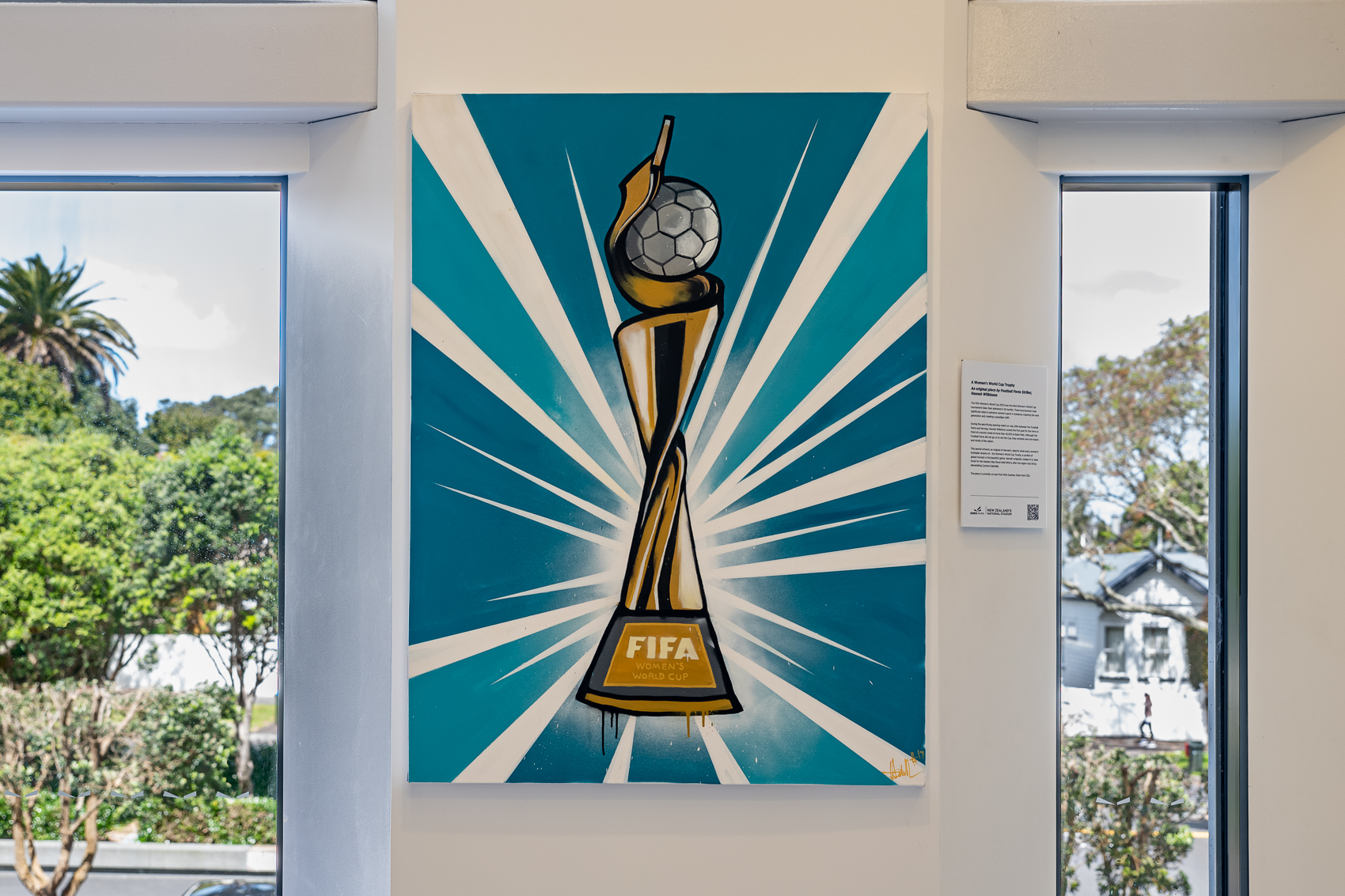
Over the past few years, we have built an art collection that reflects both the history and future of Eden Park. Around the venue are murals, sculptures, painted pianos, installations, framed moments and signatures from famous visitors. We have giant street art murals that celebrate the All Blacks, Blues Rugby, and Jonah Lomu, pianos painted by P!NK and her children, artwork from Coldplay’s Music of the Spheres tour and a turf shed wall carrying the signatures of people who have played, performed or contributed to the life of the stadium.
Amongst one of my favourite pieces is a unique artwork kindly donated by England all-rounder Ben Stokes. Titled An Unsuccessful Attempt, it sits in the away change room and commemorates New Zealand’s inaugural day-night Test against England in March 2018. After Stokes spent more than four and a half hours at the crease trying to save the match, the artwork became a reminder that even visiting teams leave their mark on Eden Park in ways that become part of the venue’s story.
Looking back at Blake’s artwork, I realised that was exactly what he had captured. Not a stadium, but the accumulation of stories, people and moments that give a stadium meaning.
Our street art programme reflects that philosophy. These murals, which include global artists, sports teams, players and performers, transform our walls into storytelling spaces, bringing colour and personality into the stadium while giving artists the opportunity to showcase their talent in a setting far removed from a traditional gallery. Someone may come to Eden Park to watch rugby, cricket, football, a concert, a conference or a function, but along the way they discover work that makes them stop, smile, take a photo and experience the venue differently.
The same philosophy sits behind many of the ideas we have introduced over recent years. Our rooftop tours allow people to see the stadium from an entirely different perspective, G9 golf transforms the field into something unexpected, and Staydium glamping creates a completely new way to experience an iconic venue, while our Black Door hospitality concept reimagines what premium experiences at a stadium can be. None of these ideas replaces what Eden Park has always been known for; they simply demonstrate that a stadium can continue to evolve while remaining true to its history.
Creativity is not simply something that makes a venue look better – it makes a destination more memorable. It creates experiences that people talk about long after they leave, gives emerging artists and creators a platform, and helps ensure a venue continues to evolve alongside the communities it serves.
This is what we mean when we describe Eden Park as a blank canvas for creativity.
Looking beyond what happens on the turf or the stage, a venue of this scale can showcase many forms of talent. Athletes, musicians and performers will always be central to the life of Eden Park, but so too are visual artists, designers, photographers, storytellers, students and young creatives looking for opportunities to share their work with large and diverse audiences.
The blank canvas idea is important because it challenges the traditional view that a stadium simply opens for an event and then closes again. Instead, it asks different questions. How can an empty wall become a story? How can a corridor become a gallery? How can a live event become an opportunity for an artist to create in real time?
This mindset has become part of our culture. Whenever we look at a new space or a new opportunity, the question is rarely “What has always been done here?” Instead, we ask, “What could this become?” It’s thinking that has shaped everything from our community initiatives and hospitality experiences to our art programme and event offering. It reflects our ambition to continually challenge traditional ideas about what a modern stadium can be.
Eden Park has never been just a large piece of infrastructure; it is a place where memories are made. Generations of New Zealanders have come here for moments they still talk about years later, whether that is a famous Test match, a World Cup final, a concert, a haka, a community event or a first visit as a child. Creativity gives us another way to capture those memories, while allowing new stories to be created for future generations.
That is why Blake’s artwork resonated with me. This was not simply a gift to mark 10 years in the role, it was a reminder of the many people who contribute to the life of this stadium. Athletes, artists, performers, staff, volunteers, partners, fans, neighbours and families all add something to Eden Park. The moments people remember are rarely created by one person; they are built by many people, often in ways the public never sees.
As CEO, my role is to help create the conditions for those moments to happen. That includes the major events people expect from New Zealand’s national stadium, but it also includes creating opportunities for others to contribute their own talent and ideas. It means opening the stadium up in different ways, celebrating creativity, supporting innovation and ensuring Eden Park continues to evolve as a place where people feel welcome, inspired and connected.
A blank canvas is only valuable if people are invited to create on it.
It’s a philosophy that extends well beyond art. It influences how we think about hospitality, visitor experiences, community programmes and even the way people interact with the stadium when no major event is taking place. Creativity is not a project or a programme; it has become part of how we think. It is part of the culture we are building as we continue striving to make Eden Park the world’s most innovative destination.
Our vision is for Eden Park to be a venue that celebrates its history but continues to challenge traditional thinking about what a stadium can be, and one that inspires others to think differently too.
Because ultimately, the future of a stadium like Eden Park will not be defined only by the events it hosts, it will be defined by the people it gives a platform to, the creativity it encourages, the innovation it embraces and the memories it helps create.