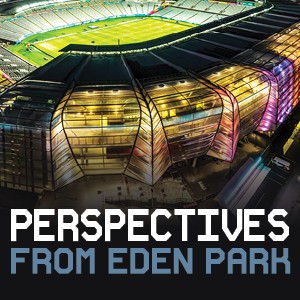






Eden Park is not only the name of our national stadium, it is a globally recognised, locally treasured and nationally significant brand. Built over more than 125 years, it’s a brand that carries history, reputation, memory and trust with equity that has real value.
Travel internationally, and the Eden Park name often opens a conversation. People know it through the All Blacks, through World Cups, concerts, moments they have watched from the other side of the world, or through their own memories of visiting New Zealand. That recognition is hard to build, difficult to replace and impossible to separate from the value of the name itself.
Many arenas, stadiums and venues around the world carry the name of a sports team, a bank, an airline, a technology company or an insurance partner. Naming rights can provide an important revenue stream, and, for many venues, they are a logical part of the commercial model. Eden Park’s approach is different, and it’s not because our commercial partnerships are less important to us, but because the Eden Park brand is one of our most important strategic assets.
As I wrote in an earlier article, Building a Partnership Ecosystem. Protecting the Name, our approach has been to build a model that allows global and local brands to align with Eden Park and strengthen the brand, rather than replace it.
Naming rights are not only a commercial transaction, they are a decision about brand trust. When an organisation gives its name to a naming rights partner, it allows a third party to sit at the centre of its identity. The organisation becomes linked to that partner’s reputation, decisions and future conduct, just as a sponsor becomes linked to the team or athlete it supports.
That association can create significant value when it works well, but we have all seen how quickly it can become complicated when one party does not live up to expectations. If the partner’s business changes, its reputation is damaged, ownership changes, or the partnership ends abruptly, the organisation can be left managing consequences it did not directly create.
For Eden Park, that is an important consideration. The name ‘Eden Park’ is not just the name of a stadium – it’s a name that belongs to everyone who has created memories here, played or performed on our hallowed turf, watched defining national moments from the stands, worked or volunteered here, hosted charity or community occasions, or sees the venue as part of New Zealand’s story.
I was reminded of this over the weekend while watching From Field to Front, the Anzac Day documentary that tells the story of Dave Gallaher, captain of the 1905 Originals All Blacks, who later served in the First World War. Eden Park was part of that story then, and it remains part of that story now, with soil from the stadium having travelled to places of significance in Ireland, France and Belgium, and soil from those places now returned to our national stadium.
This connection is a powerful reminder that Eden Park’s brand has been built through much more than fixtures and events. It has been built through experience, through history, service, memory, identity and national moments that continue to matter across generations.
A brand is not only what an organisation says about itself, it is what people see, feel and remember every time they engage with it. For Eden Park, those experiences are diverse, from the intensity of an All Blacks or Black Ferns test, the scale of a major international concert, the emotion of the opening match of the FIFA Women’s World Cup, the intimacy of a corporate function, the surprise of playing G9 Stadium Golf, the novelty of staying in our Staydium Glamping Domes, to the simple act of a local school using the venue as part of its community.
Each experience adds to the brand. While Eden Park is a stadium, it is also a destination, a tourism asset, a community platform, an event precinct, a hospitality business, a partner ecosystem and a strategic piece of national infrastructure.
Of course, there are formal ways of calculating a brand’s value. If we were to do this for the Eden Park brand, alongside commercial revenue, we would need to factor in awareness, reputation, global recognition, event attraction, partnership demand, media value, tourism impact, community trust and the role the venue plays in New Zealand’s national story.
There is also a strategic way to think about value. Naming rights may provide immediate and predictable revenue, but they monetise one asset line. Retaining the Eden Park name allows us to keep building the platform that supports many others, including stronger partnerships, deeper alignment, long-term brand equity and national positioning that is difficult to price but very real.
Some of the world’s most recognised venues have made a similar choice. Wembley, Madison Square Garden and Fenway Park have retained their historic names and continued to build value around the strength, recognition and meaning of those brands. That approach is less about short-term revenue and more about maximising lifetime brand value rather than monetising a single asset line.
That same thinking sits behind Eden Park’s Icon Partner programme. The model allows global and local brands to align with Eden Park in a way that enhances the venue, improves the experience and creates meaningful commercial value, while ensuring those brands sit alongside Eden Park rather than replace it. At its core, the programme recognises that the best partnerships are those that add to brand equity rather than absorb it.
The strongest brands are not simply well-known. They create strong emotional and functional connections with people. They innovate, adapt and remain relevant while staying true to what makes them distinctive. For Eden Park, that balance is important. The brand is rooted in history and carries memory, but it cannot be trapped by history. It must also carry momentum.
That evolution has been central to our strategy. Major sport remains fundamental to who we are, but a successful national stadium cannot rely only on a small number of major fixtures each year. That is why we have focused on increasing utilisation, diversifying content and creating new reasons for people to engage with Eden Park. Concerts, community events, rooftop tours, stadium golf, glamping, functions, cultural events, education partnerships and unique hospitality experiences are not separate from the Eden Park brand; they are part of how the brand continues to grow.
This is also where the idea of globalising a local brand becomes important. Brand strategy often talks about “glocal” thinking, where global brands adapt to local markets. Eden Park asks the reverse question: what does it mean to take something deeply rooted in place and make it relevant on a wider stage?
For New Zealand, successfully answering that question matters. When international artists, sporting organisations, broadcasters, sponsors, athletes, tourists and business leaders engage with Eden Park, they are not only engaging with a venue in Auckland, they are engaging with New Zealand. A strong international brand helps position Auckland as a city capable of hosting major global content, supports tourism, hospitality, retail and transport, strengthens New Zealand’s event economy and helps ensure our country remains part of global touring, sporting and cultural conversations.
As New Zealand’s national stadium, our role is not simply to host large-scale events. It is to create moments that matter, support economic and social benefits, strengthen Auckland’s position as a global events city and ensure New Zealand continues to have a venue capable of welcoming the world.
That requires us to keep investing in the brand as well as the infrastructure, because the Eden Park name is not only a reminder of what has happened here, but also a platform for what comes next.