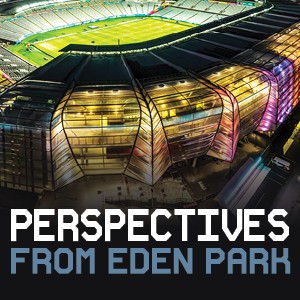






In just a few days, on 10 April, the Resource Management (Auckland Unitary Plan Modification (Eden Park)) Regulations 2026 will come into force. These changes are transformational for our operating model, enabling us to operate like a modern, world-class stadium.
But the legislation does more than that. It states in black and white in New Zealand law that Eden Park is the country’s national stadium.
‘Eden Park is New Zealand’s national stadium. It is a multi-purpose stadium for sports and entertainment. The Eden Park Precinct provisions provide specific planning controls for the use, development and redevelopment of Eden Park.’
Eden Park has been known as our national stadium for many years. We have spoken about it that way, visitors from here and overseas experience it that way, and our signage reflects it. But there is something different about seeing that recognition formally written into the local planning framework that governs how we operate the venue.
It is no longer simply a matter of history, reputation or public perception. It is now formally recognised. This is something I believe is important, not just for Eden Park, but for New Zealand.
A national stadium is not simply a large piece of infrastructure, and it is not just a venue that hosts major sports matches and concerts. A national stadium is a venue that carries history, identity and memories. It is a place where people come together for moments that stay with them for years, and in many cases for life, and it is a place that is globally significant. These attributes are what give a venue meaning beyond its physical footprint, and it is certainly true for Eden Park.
You cannot recreate more than 125 years of history. You cannot manufacture great test matches, famous innings, iconic sporting moments, major concerts, cultural festivals, Guinness World Records, celebrations, and the memories that generations of New Zealanders have attached to this venue. That history has been built over time, through shared experience, and it is irreplaceable.
For me, this is why having Eden Park formally recognised as our national stadium matters. But I don’t just see this as a moment only about history, I also see it as a statement about the future.
The same regulations that state Eden Park is New Zealand’s national stadium also give effect to planning controls that better reflect what a modern multi-purpose venue needs to be. That matters because no stadium can stand still. Audience expectations change, event models change, cities change, global environments change. If a venue is to remain relevant and continue delivering value, it must evolve with those changes.
That has been a key part of our focus at Eden Park.
For me, being the national stadium has never meant being defined by only one sport or one type of event. It means being genuinely multi-purpose. It means sport, entertainment, culture, community and recreation all having a place within the venue’s future and it means creating memorable moments for as many people as possible, in as many different ways as possible.
That is why increased utilisation matters. It is not simply about doing more for the sake of it. It is about ensuring this venue continues to perform the role a national stadium should perform. It is about ensuring Eden Park remains vibrant, relevant and economically sustainable. And it is about making sure New Zealand has a venue that can continue to attract major events, bring people together and contribute to the wider success of our city and country.
Importantly, I do not think recognition as the national stadium should be seen through a narrow lens. We are a relatively small country, so while we need a strong national stadium to make sure we attract major events, we also need a strong national venue network and a ‘venue of best fit’ approach. All our venues, irrespective of where they are located, should be working together so that collectively we strengthen the country’s ability to attract and host world-class sport, entertainment and cultural experiences.
Eden Park has a key role to play in that, and I am proud of that role. But I am equally proud of the part this venue can play within a broader national ecosystem, which is why I believe it’s important to highlight this moment.
To see Eden Park recognised in law as New Zealand’s national stadium is something we should all be proud of. It not only reflects the history of this venue and the role it has played in the life of the country, but also signifies the responsibility it carries into the future and ensures Eden Park continues to deliver for future generations of New Zealanders.