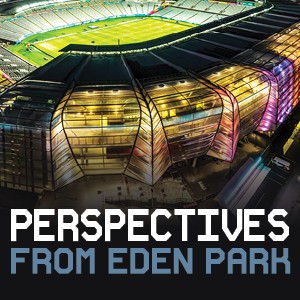






Last weekend was one of the busiest we have had at Eden Park for some time, but what made it especially significant was not just the number of events; it was the diversity of those events.
Across four days, we hosted five events:
- Friday – an international FIFA Series double-header that included games between Cape Verde and Chile followed by the All Whites taking on Finland
- Saturday – the Blues played the Fijian Drua as part of Super Rugby Pacific.
- Sunday – beloved children’s entertainer Emma Memma hosted a s Picnic at Eden Park, presented by tonies®.
- Monday – we hosted another international football double-header
- All weekend on the Kennards Hire Community Oval, the Auckland Aces played Canterbury in the eighth round of the Plunket Shield.
This was not four days of the same sport or of the same artist performing. It was a genuinely diverse calendar of events that brought very different audiences to Eden Park for very different reasons.
When I talk about increased utilisation, this is exactly what I mean. We’re not simply filling dates for the sake of it; we’re deliberately building a diverse content mix that reflects the role of a modern national stadium. When I became CEO in 2017, I brought a clear understanding of stadium economics and a strategy for how Eden Park needed to evolve. To deliver sustained economic and societal benefits, a stadium cannot sit idle between the biggest headline events – it needs to be active, relevant and open to a wide range of experiences, communities and audiences.
And this weekend reflected that strategy.
Families with young children sat on our hallowed turf for the Emma Memma concert, rugby fans turned out for Super Rugby, passionate football supporters came together for international FIFA Series fixtures, and cricket fans watched the game play out on our outer oval. While each event had its own atmosphere, its own energy and its own audience, they demonstrated what a highly utilised and genuinely multi-purpose stadium can, and should, look like.
Our team absolutely love delivering major events. They create excitement, attract attention and leave lasting memories, but we also understand that a sustainable stadium cannot rely only on hosting the biggest and most obvious moments. It needs a broader calendar and a diversity of content. It needs to create reasons for people to come through the gates, not just on the few occasions that naturally attract national attention.
That is one of the reasons Sunday stood out so strongly.
Emma Memma’s Picnic at Eden Park was unlike anything else we’ve delivered and was very different to the football and rugby matches that also took place over the weekend, and that was exactly the point. We’ve been talking with tonies®, and more recently Dr Emma Watkins (PhD), for over three years about this event. Importantly, the Picnic at the Park event did not simply appear on the calendar. Content does not fall into your lap; it takes work to identify what the audience wants, what suits the population and the venue, and then shape and deliver it well.
While the Emma Memma event was limited to 1,000 families, its significance went far beyond capacity. It engaged an entirely different audience in a completely different way. For many families, and especially their children, it was their first Eden Park experience. I spoke to adults who told me they never thought they would have the chance to sit on the same turf the All Blacks play on, or that their child’s first concert would be at Eden Park. Those moments matter because they create connection, they broaden people’s relationship with the stadium, and they remind us that a national stadium should not only be a place people watch from the stands, but also a place where people can feel part of something special.
That is why delivering a diversity of content is important.
It means more people have the chance to create memorable moments at Eden Park. It means we are creating a broader calendar that welcomes different events, audiences, and memorable moments throughout the year, and it means Eden Park can continue to play a key role in ensuring Auckland is globally ambitious and a great place to live, stay, work, and play.
Of course, a weekend like this does not happen without detailed planning, strong operational delivery and a clear strategy for managing our hallowed turf. I have previously written about how we manage our turf and why grass matters if you want a stadium to be genuinely multi-purpose. Moving from football to rugby to family entertainment while ensuring the playing surface exceeds international standards requires the right systems, the right investment and, importantly, the right people.
That work, led by Blair Christiansen, has recently been recognised globally, with Eden Park’s turf team named the only New Zealand finalist in the renowned 2026 StadiumBusiness Awards. This acknowledgement is well deserved. Their work is highly skilled, often unseen and absolutely fundamental to our ability to deliver weekends like this one.
Increased utilisation and diversity of content are the result of deliberate planning and a clear strategy. It comes from thinking differently about the role a national stadium has in enhancing its community and country. It is also why I am excited about what comes next.
Yesterday, we announced that Tottenham Hotspur Football Club will play Auckland FC at Eden Park, a match that takes place just one week after the All Blacks take on Ireland. While both sports events, they will attract different audiences and create more memorable moments. But these, like all our events, are part of the same ambition to ensure Eden Park remains active, relevant and accessible to as many people as possible.
With more than 125 years of history, Eden Park has already been the setting for some of New Zealand’s most historic sporting, cultural and entertainment moments. But the responsibility of a national stadium is not only to honour the past. It is to keep creating opportunities for more moments still to come.
That is what we are committed to delivering – a national stadium that continues to evolve, broadens its content, increases utilisation and gives people from all walks of life the opportunity to create their own memories at Eden Park.
Because this weekend was about more than being busy. It was a reminder of what a truly hybrid, multi-purpose stadium should be.