





Recent major event announcements, including Robbie Williams, Guns N’ Roses and State of Origin, are significant in their own right. They will bring fans together, create memorable moments and generate real excitement. But they also point to something much bigger.
They remind us that major events are not simply dates on a calendar. They are part of the event economy, and that economy plays an important role in shaping the kind of city we are and the kind of city we want to become.
When people talk about economic growth, the focus often goes to housing, transport, commercial development or major infrastructure works. While those things matter enormously, so too does creating a city where people want to be. A city where people want to visit, stay longer, spend money, gather with others and build memories. A city where residents feel proud of where they live and where businesses benefit from increased activity and confidence.
The event economy is a term being used more often. Government is increasingly framing major events as a driver of international visitation, economic growth and destination positioning. The OECD has also made the point that cultural, sporting and business events can create jobs, support local businesses, raise the profile of places and contribute to long-term local development when they are planned intentionally.
Major events do not just fill a stadium. They fill hotel rooms, restaurants, bars and transport networks. They create foot traffic, visitor spend and exposure for a city. They generate activity before the gates open and long after the final whistle or encore. They support jobs, promote growth and help build confidence in a city’s ability to host at scale.
That is why these recent announcements are important. Take State of Origin as an example. Auckland Unlimited has said the match is expected to attract more than 10,000 international visitors, generate more than 50,000 international visitor nights and inject an estimated $17.4 million into the economy. Those numbers help quantify what people in the events sector have long understood – the benefit of a major event extends well beyond event day.
The same principle applies to major concert activity. A major international tour announcement is not simply a win for music fans. It also sends a strong signal that Auckland is a credible destination for premium large-scale global content. That matters in an increasingly competitive market where cities are competing not just for tourists, but for relevance, profile and discretionary spending.
Auckland is New Zealand’s largest city and the main gateway for international visitors. We are home to major businesses, major institutions and major infrastructure. If we want to be a city where people choose to live, work, play and stay, then we need to recognise that major events are part of that equation.
Events also strengthen the wider visitor economy. Someone may arrive as a ticket holder, but they leave having stayed in a hotel, dined in local restaurants, used public transport, spent time in surrounding precincts and experienced Auckland more broadly. The value of an event is not confined to the venue.
From my perspective, the key point is this: these outcomes do not happen by accident.
A strong event economy depends on the right settings. It depends on infrastructure, transport connectivity, operational readiness and planning frameworks that make it possible to compete for opportunities when they arise. It also depends on venues that can host content at scale.
That is why enabling infrastructure matters so much. It is also why decisions that improve utilisation matter. If we want to compete for globally significant content, we need systems that support that ambition rather than constrain it.
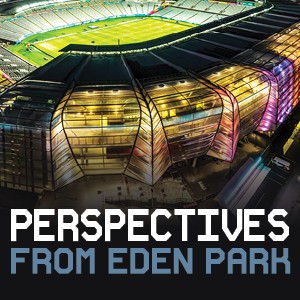
At Eden Park, we see this first-hand. Our role is not simply to open the gates on event day. It is to ensure New Zealand’s national stadium is ready, relevant and capable of delivering for hirers, fans, partners and the wider city. That means thinking about utilisation, adaptability and long-term value. It means viewing the stadium not just as a place where events happen, but as part of the broader economic and social fabric of Auckland.
The event economy should not sit on the sidelines of discussions about growth, productivity and city development. In a globally competitive environment, it is part of the growth strategy. Cities that understand this move early, invest deliberately and align their infrastructure, planning and event attraction efforts. They do not treat major events as one-off wins. They treat them as catalysts.
Auckland has every reason to think that way. We have the audience, the appetite, the hospitality sector, the tourism sector and the transport links. We have a national stadium close to the CBD and, with the City Rail Link due to open later this year, even stronger connectivity. We should be using these strengths to their fullest extent.
Of course, not every event is the same and not every opportunity should be measured only in dollars. Events also contribute to social connection, civic pride and the stories a city tells about itself. They create shared experiences that stay with people long after the lights go down.
But if we are serious about Auckland being a place people want to live, work, play and stay, then we should be equally serious about the event economy. Because major events matter far beyond event day. They are about confidence, competitiveness, vibrancy and creating the kind of city people want to be part of.