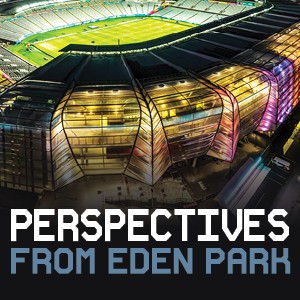






In a world that often feels divided, shared experiences matter more than ever. Over the weekend, more than 1,100 performers from 13 countries marched, danced and performed on our turf, reminding us that sport, culture and entertainment have the power to connect people across borders and generations.
For me, events like The Royal Edinburgh Military Tattoo reinforce something I have long believed. Stadiums are not simply venues for fixtures or performances. They are platforms for connection.
It was a privilege to host the Tattoo at Eden Park. Deeply rooted in Scottish tradition yet global in reach, the production brought together military bands, cultural groups and contemporary performers in a way that resonated far beyond the field itself.
We were also honoured to welcome The Rt Hon Douglas Alexander, Secretary of State for Scotland. During his visit, he reflected on the origins of the Tattoo and the belief that culture should never be used to divide people, but to bring them together. That message carries weight. When traditions travel across continents and are embraced on a New Zealand stage, they foster understanding rather than difference.
Through New Zealand’s sports diplomacy strategy, led by Sport New Zealand, there is clear acknowledgement that sport strengthens international relationships, deepens people-to-people connections and enhances our global reputation. From my position as CEO of our national stadium, that strategy is not an abstract concept, it is something we see in action every time we host an event.
When visiting teams arrive to face the All Blacks or Black Ferns, they bring supporters, officials, families and media from around the world. When international cricket, football and rugby league matches are played, they connect communities across continents. When global artists perform, their crews and fan bases travel, often from Australia, the United States, Asia and Europe. Those interactions extend well beyond the 80 minutes on the field or the three hours on stage.
At Eden Park we often talk about being multi-purpose. Rugby and cricket have played a defining role in our history, but they are not our only chapters. Our story, and contribution, includes community, music, sport, culture and recreation. That diversification is not just a commercial shift, it reflects the broader responsibility of a national stadium to provide a platform where sport, culture, entertainment and community intersect.
I have been fortunate to experience many special moments at Eden Park, but one of the most memorable was standing in the stadium when I first arrived in New Zealand and hearing a bilingual national anthem followed by a haka. In that moment, I understood how deeply this place is woven into our national identity.
Equally, I have watched global artists perform here and seen audiences from different generations and backgrounds singing the same lyrics together. Whether it is a rugby test, a Women’s World Cup fixture, a concert or a cultural showcase, the outcome is similar. People gather. They share an experience. They connect. They leave with a story.
The Tattoo was a perfect example of this. It was proudly Scottish in heritage, yet unmistakably global in execution. Defence representatives, cultural groups, families and international visitors all stood together in Auckland, celebrating tradition while forging new connections.
Importantly, this is not about politics. It is about people. Diplomacy does not always occur in formal meeting rooms. It often begins with shared experiences. A supporter travelling from overseas to watch their team. A family attending their first concert. A community group performing on a national stage. These are the moments that build familiarity and respect.
As New Zealand continues to compete on a global stage for major events, we should be clear about the role our infrastructure plays. A national stadium must be adaptable, inclusive and outward looking. It must reflect who we are and how we wish to engage with the world. That includes sport at the highest level, cultural showcases such as The Royal Edinburgh Military Tattoo, global music tours and hundreds of community events each year.
In a time when much of our interaction occurs through screens, the power of gathering in person should not be underestimated. When 25,000 or 50,000 people share the same space, the same anthem or the same song, there is a sense of common humanity that transcends difference.
Stadiums cannot resolve global conflict. But they can create connection. And in many cases, connection is where diplomacy truly begins.